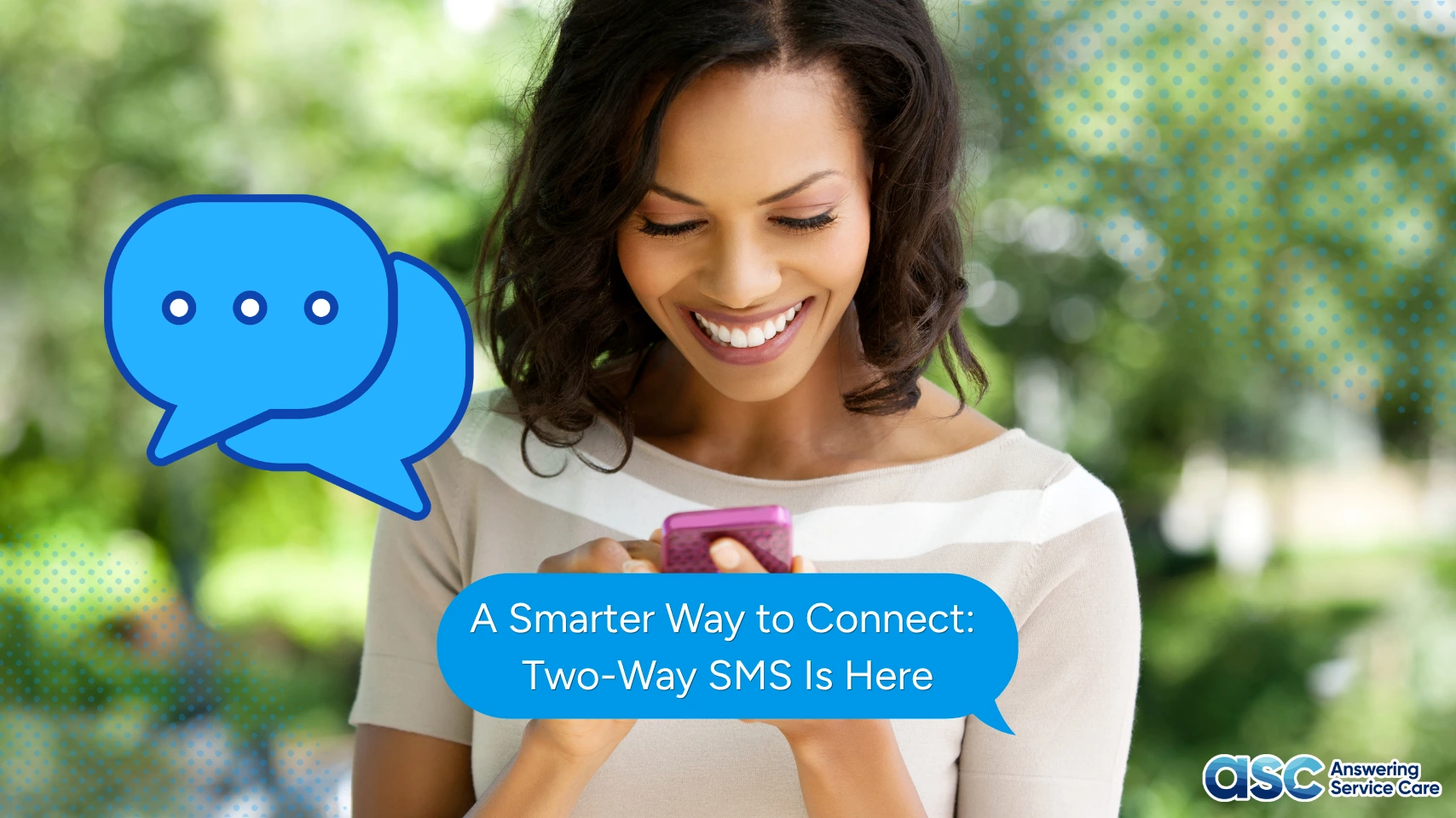

Customer communication no longer lives in one channel. Some people prefer to call. Others want to text. Many switch between both depending on urgency, privacy, or convenience. Businesses that rely on a single point of contact risk slowing down conversations that could have been simple and fast. Two-way SMS bridges that gap.
SMS allows your organization to respond in the format your customers are already using every day, while keeping those conversations structured, professional, and connected to your live answering service. Instead of creating another disconnected inbox or relying on personal cell phones, messaging becomes part of your existing support infrastructure.
Answering Service Care’s two-way SMS feature is designed to work alongside live call handling, web forms, and appointment scheduling. It is not a replacement for voice. It is an extension of it. Together, they form a more complete omnichannel communication strategy.
Text From Your Existing Business Number
One of the most essential features of two-way SMS texting is consistency. Customers text the same number they already use to call your business. There is no new number to promote and no confusion about which contact method is correct.
From an operational standpoint, this matters. Recognizable numbers build trust. When clients see a familiar business number, they are more likely to engage. Keeping texting and calling under one number also strengthens your brand presence across channels.
Internally, all text messages remain centralized inside your ASC system rather than on individual employee phones. This protects privacy, reduces compliance risks, and ensures that business conversations do not disappear when someone is out of the office. For regulated industries such as legal, healthcare, insurance, or finance, maintaining communication within a structured platform supports documentation, accountability, and continuity.
Instead of informal texting scattered across devices, your business maintains a professional, trackable communication stream that aligns with your answering service coverage.
Real Two-Way Conversations With Full Context
ASC designed this feature for authentic interaction, not automated alerts. Your team and ASC agents can send and receive messages in real time, viewing full conversation threads, delivery status, and message history within a shared inbox.
That shared visibility improves efficiency. If one agent steps away, another can continue the conversation without asking the customer to repeat details. If a text turns into a call, the context is already available. If a lead reaches out late in the evening and follows up the next morning, your team sees the entire exchange.
For businesses that handle appointment scheduling, intake questions, service confirmations, or lead qualification, this continuity shortens response cycles. A customer might call initially, then request follow-up information via text. With two-way SMS integrated into your ASC service, that transition happens smoothly rather than fragmenting the conversation.
This approach creates a more cohesive experience where customers feel heard rather than shuffled between systems.
Smart Routing That Matches Your Business Hours and Workflow
Text messaging should not overwhelm your internal team. Smart routing directs incoming messages based on time of day, availability, or predefined rules.
During business hours, texts can be routed directly to your internal inbox or assigned to available agents. After hours, Answering Service Care agents manage your SMS, hold them for morning follow-up, or escalate them based on urgency. The structure mirrors how your calls are handled, which keeps workflows consistent across channels.
This flexibility is especially valuable for businesses with fluctuating call volumes, seasonal demand, or multiple service locations. Instead of leaving texts unattended overnight or expecting staff to monitor personal devices, your answering service becomes an extension of your messaging strategy.
Omnichannel support works best when each channel supports the other. Routing rules ensure that texts complement your live voice coverage rather than creating operational friction.
Faster Responses With Brand Consistency
Speed matters in messaging. Customers expect quicker replies via text than email. At the same time, your brand voice should remain consistent regardless of who is responding.
Saved quick responses allow agents to answer common questions efficiently while using approved language. This feature reduces response time without sacrificing tone. It also helps standardize messaging among team members, which protects the brand’s reputation.
Branded greetings can automatically introduce your company name and relevant information at the start of a new conversation. That clarity reassures customers that they are speaking with the correct business and not an unfamiliar number.
When quick replies and live agents work together, communication feels both responsive and human. You gain the efficiency of structured messaging without losing the warmth that defines professional customer service.
Strengthening Your Omnichannel Strategy
Two-way SMS texting is not a standalone add-on. It is part of a broader communication strategy that includes live answering, call routing, intake management, and after-hours coverage.
When calls, texts, and other contact methods feed into a unified system, your business gains visibility. You can see how customers initiate contact, when they follow up, and which channel ultimately resolves the issue. This insight supports better staffing decisions, stronger response time management, and improved customer retention.
Most importantly, it removes friction. A prospective client can text a quick question. An existing customer can confirm an appointment without waiting on hold. A lead who misses a call can respond immediately via text rather than restarting the process.
For $40 per month, Answering Service Care’s two-way SMS adds a practical layer of accessibility that integrates seamlessly with your existing coverage. It broadens your customers’ ability to reach you without expanding complexity behind the scenes.
In 2026 and beyond, accessibility will not be defined by a single channel. Businesses that integrate voice and messaging into one coordinated system will be better positioned to respond quickly, professionally, and consistently.