
Why Customers Prefer Calling

As digital communication, such as email, chatbots, and instant messaging, expands, it might seem like phone calls are becoming obsolete. However, statistics tell a different story. Many customers still prefer calling businesses, particularly for urgent issues, personalized support, and complex inquiries. The human connection and immediate assistance a phone call provides cannot be replicated by digital means alone. Below, we examine the key reasons why voice communication remains a vital channel for customer interactions, supported by data from industry studies.
Customers Prefer Immediate Resolution
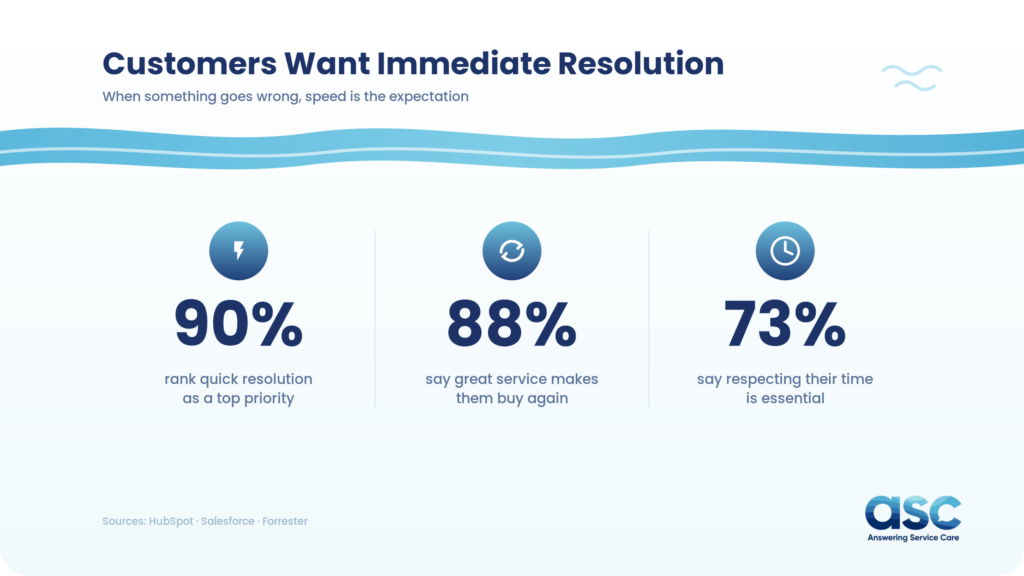
Time is a customer’s most valuable resource, and when they have a problem, they don’t want to wait. They want inquiries resolved as quickly as possible. According to HubSpot, 90% of customers rank quick issue resolution as a top priority when reaching out to a business.1 In comparison, chatbots and email responses can take hours or even days to reach a desired outcome. A phone call cuts through the delay. It provides customers with direct access to a human who can listen, respond, and resolve their problems in real-time. The impact? Salesforce reports that 88% of customers say good customer service makes them more likely to make a repeat purchase, highlighting the link between prompt support and customer loyalty.
But speed isn’t the only factor. Reliability also makes a large impact. Customers often turn to phone support when other channels fail to meet their expectations. A delayed response from an email or an unhelpful chatbot interaction can frustrate customers, prompting them to seek direct human assistance. This experience means consumers seek the one thing that consistently delivers: direct human interaction. According to Forrester Research, 73% of consumers say respecting their time is essential to good service.3 By offering fast, efficient phone support, businesses send a clear message: We hear you. We’re here for you.
Furthermore, the urgency of certain issues requires immediate attention. Customers do not want to wait for an email response when dealing with billing discrepancies, account security, or product malfunctions. They demand immediate attention, and a phone call provides precisely that. As evidence of this, Invesp notes that businesses that offer quick and effective voice support retain 89% of their customers, reinforcing the idea that rapid resolution is critical for long-term engagement.
Ultimately, customers don’t just want answers. They want action. Businesses that prioritize immediate resolution can meet and exceed these expectations.
Personalized Interactions & Customer Satisfaction
Automation might be everywhere, but one thing hasn’t changed: customers want to feel like more than just a number. A McKinsey study found that 71% of consumers crave personalized interactions, while 76% feel frustrated when businesses fail to make their experiences relevant.5 No chatbot, email, or automated script can replace the power of a real conversation. A phone call does more than just resolve an issue. It builds trust, reassures the customer, and creates a moment of connection that digital channels simply can’t replicate.
Personalized service is a significant factor in customer retention and satisfaction. An Epsilon survey of 1,000 consumers (ages 18-64) found that 80% are likely to stick with brands that tailor experiences to their needs, and 90% gravitate toward companies that make interactions feel uniquely their own.6 A phone call isn’t just another touchpoint; it’s an opportunity to listen, adapt, and respond in real time, showing customers they’re valued, not just processed.
And here’s something every business leader should know: customers are willing to pay for that kind of service. In fact, 58% of U.S. consumers say they’d spend more for a better customer experience.7 That means investing in high-quality, personalized phone support does more than keep people happy. It builds loyalty strong enough to justify premium pricing. On the flip side, failing to meet expectations can drive customers away. A staggering 78% of consumers have abandoned a purchase due to poor service.8 If an interaction feels cold, generic, or frustrating, the customer isn’t just walking away from the conversation, but rather they’re walking away from the brand.
In short, personalization extends beyond addressing customers by name. It involves recalling past interactions, anticipating future needs, and providing proactive solutions. Businesses that integrate this level of customization into their phone support not only enhance customer satisfaction but also create a seamless and efficient experience that strengthens long-term relationships. By leveraging insights from customer data, representatives can provide meaningful and context-aware interactions that make customers feel valued and understood.
Consumers Pay More for Better Service
Customer experience proves to be more than keeping clients happy. It’s a powerful revenue driver. Consumers aren’t just looking for products or services; they’re willing to pay a premium for a brand that treats them well. According to Capgemini, 81% of consumers are willing to spend more for a better customer experience, with 1 in 10 ready to increase their spending by more than 50% for superior service.9
This willingness to invest in excellent service isn’t uniform across all age groups. Generational differences play a key role. A Forbes report found that 62% of Millennials and 60% of Gen Z are happy to pay extra for outstanding service, compared to just 46% of Baby Boomers. Younger generations, raised on seamless digital experiences and instant gratification, expect businesses to prioritize convenience, personalization, and responsiveness, and they’re willing to reward brands that do.
The data on the success of exceptional customer service and its relation to increased loyalty and willingness to pay more are overwhelming. Customer service should be considered a profit center, not just a cost center. A CX Dive report found that 9 out of 10 consumers are willing to pay more for excellent customer service.10 This data reinforces a simple truth: Companies that invest in quality support channels, personalized interactions, and efficient problem-solving can command higher prices, drive retention, and increase lifetime customer value.
Beyond just loyalty, superior service can also lead to increased spending over time. Research from PwC found that 43% of consumers would pay more for greater convenience, and 42% would spend more for a friendly, welcoming experience.11 Customers don’t just want their problems solved; they want to feel valued, heard, and appreciated every step of the way.
What’s the takeaway? Exceptional service isn’t optional if businesses want to multiply their revenue. Businesses that prioritize high-quality, personalized interactions build stronger customer relationships, elevate their brand reputation, and create a competitive edge, ultimately affecting their bottom line. Conversely, those who neglect customer service risk losing loyalty and significant revenue opportunities.
Voice Support Improves Retention
Retaining existing customers is significantly more cost-effective than acquiring new ones. In fact, research from Invesp shows that acquiring a new customer costs 5 to 25 times more than retaining an existing one. When companies prioritize exceptional service, the payoff is undeniable. HubSpot found that 93% of customers are likely to make repeat purchases from brands that deliver exceptional customer service.12 These statistics highlight a simple truth: quality service fuels long-term customer loyalty.
Voice support is a tool for building relationships and should not be focused solely on complaints. A well-trained, empathetic representative can turn a routine customer call into a moment of connection that strengthens brand trust. Service quality has a direct impact on purchasing behavior, with 73% of consumers citing customer experience as a key factor in their buying decisions, according to PwC. In other words, people don’t just return to companies that solve their issues but to brands that make them feel valued.
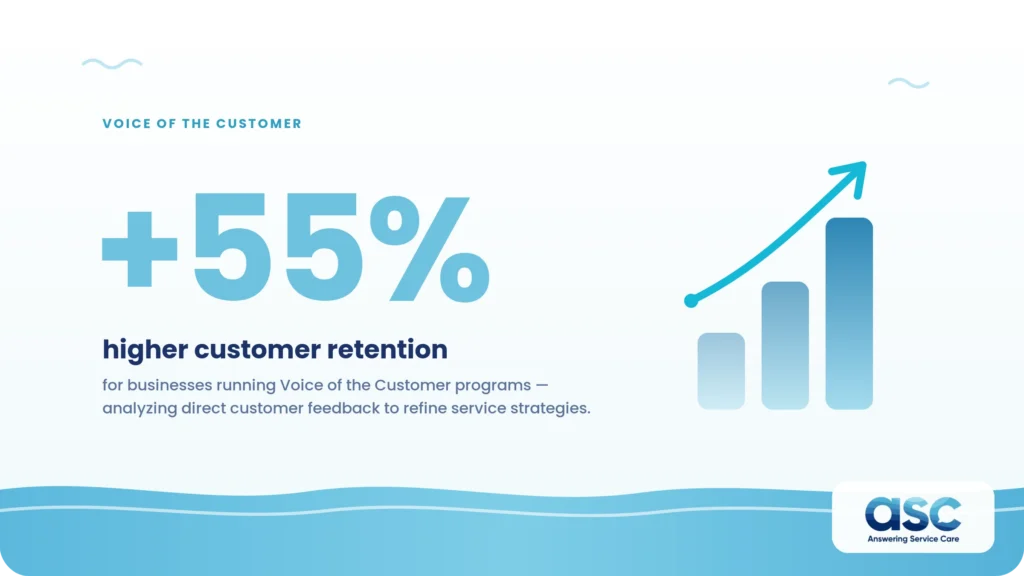
A proactive approach to voice support can further enhance retention. According to one recent study, businesses implementing Voice of the Customer (VoC) programs, which analyze direct customer feedback to refine service strategies, see 55% higher retention rates. Businesses can reduce churn and foster lasting loyalty by listening to customer concerns, refining their communication, and personalizing interactions.
These findings underscore the importance of robust voice-based customer support in fostering customer loyalty. By ensuring that customers can easily reach a business via phone and have their concerns addressed promptly, companies can significantly enhance retention rates and build long-term relationships with their clientele. The result? Stronger retention, increased lifetime customer value, and a business that thrives on loyalty, not just one-time sales.
Omnichannel Experiences Enhanced by Phone Calls
While businesses must embrace a variety of communication channels, calls remain a key component of an effective omnichannel strategy. But while chat, email, and self-service portals all have their place, phone calls remain a cornerstone of an effective omnichannel strategy. According to CXToday, 9 out of 10 consumers expect seamless transitions between communication channels. And phone support often serves as the crucial link between online interactions and final decisions.13 A customer might browse a website, start a live chat, and then pick up the phone for confirmation before purchasing. Businesses risk losing customers at key moments in their journey without a reliable voice channel.
As the industry continues to evolve, consumers expect businesses to remember their past interactions and preferences, with 72% of customers stating they expect companies to recognize them across various channels.14 When customers must repeat their concerns multiple times across various platforms, it can lead to frustration, inefficiency, and, ultimately, lost trust. A well-integrated phone support system bridges this gap by providing real-time, personalized assistance that builds on past interactions rather than starting from scratch.
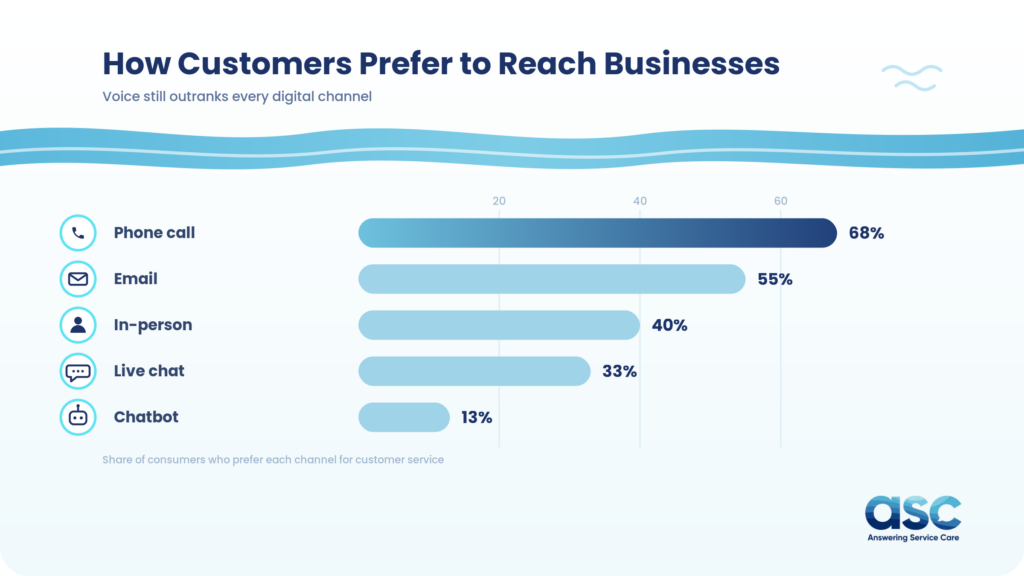
Even as digital options continue to grow, phone calls remain the preferred communication method. 68% of consumers still favor phone calls over other service channels, with email (55%), in-person interactions (40%), live chat (33%), and chatbots (only 13%) trailing behind.15 Unlike text-based platforms, a phone conversation provides immediacy, clarity, and human connection, which are critical elements in complex customer interactions. By integrating call centers with digital tools, businesses create a seamless experience where agents can instantly access customer histories from email, chat, or social media, ensuring a frictionless transition from digital to live conversation.
It’s also important to consider that voice support acts as a safety net when digital channels fail. Forrester reports that 69% of online consumers have turned to phone support when other methods fail, and phone interactions continue to have the highest satisfaction rate at 69% compared to online alternatives. Whether a chatbot can’t resolve an issue or an email response takes too long, customers want the assurance of speaking to a real person when it matters most.
Beyond customer satisfaction, strong omnichannel engagement has a direct impact on revenue. Businesses that integrate phone support effectively retain 89% of their customers, compared to just 33% retention for those with fragmented or ineffective strategies.16 That’s the difference between a brand that builds long-term relationships and one that constantly struggles with churn.
The bottom line? Customers appreciate options, but they also demand reliability. Phone calls remain among the most effective ways to build trust, answer complex questions, and close sales. In an authentic omnichannel experience, voice support isn’t just an afterthought. It’s a competitive advantage.
Importance of Trust in Voice Communication
While phone calls remain a preferred method of communication, rising concerns about spam and fraud pose a challenge. Hiya’s 2024 study highlights that unwanted spam calls are a growing issue, often causing customers to hesitate before answering unknown numbers.17 This surge in unwanted calls has tangible consequences for businesses. Research by TransUnion revealed that 72% of consumers have avoided answering calls due to safety or fraud concerns, only to discover later that they missed essential communications.18 Such hesitancy can lead to missed opportunities and strained customer relationships.
Businesses that want to maintain trust must ensure their calls are recognizable, professional, and clearly identified. Verified caller ID systems and secure phone protocols can help reassure customers and preserve the integrity of business communications. To combat these challenges and restore trust, businesses can implement several strategies:
- Branded Caller ID: Displaying the company’s name and logo on the recipient’s screen can enhance recognition and credibility. This approach has improved answer rates and fostered customer trust by ensuring businesses are easily identifiable.
- CNAM Caller ID: Displaying only the caller’s name alongside their phone number. This service helps reduce call rejection rates and improve answer rates.
- STIR/SHAKEN Protocols: Implementing these frameworks helps authenticate caller identities and reduce the risk of call spoofing, thereby enhancing the integrity of voice communications.
- Clear Communication: Informing customers about the legitimate phone numbers used by the business and advising them on how to recognize official communications can further mitigate skepticism.
By adopting these measures, businesses can rebuild consumer confidence in voice communications, ensuring their calls are welcomed and trusted.
Voice Communication Essential for YMYL Industries
For YMYL industries (Your Money or Your Life), voice calls are not just preferred but essential. Hiya’s 2024 State of the Call report highlights that over one-third of consumers prefer voice calls when dealing with healthcare providers, and 33% favor them when communicating with banks or lenders. When the stakes are high, whether it’s discussing a medical diagnosis, handling a financial transaction, or verifying sensitive information, customers instinctively turn to real conversations over digital interactions. A text or email might be efficient, but it lacks the trust, nuance, and security of speaking to a real person.
YMYL industries simply can’t afford miscommunication. In healthcare, patients require clear and immediate answers about medications, test results, and upcoming appointments. A phone call provides that direct connection to a professional, eliminating guesswork and reducing the risk of errors. Many patients also feel more comfortable discussing personal health concerns over the phone than navigating an impersonal chatbot or email thread.
The financial sector is another prime example. Whether disputing a fraudulent charge, applying for a loan, or understanding complex banking policies, customers want reassurance that their concerns are being heard and handled. Hiya’s research confirms that customers trust voice communication for high-risk financial matters, particularly in an era of increasing cyber threats. A J.D. Power study further reinforces this, showing that customers who interact with their bank over the phone report higher satisfaction levels than those who rely solely on digital channels.19
Security and fraud prevention make voice communication even more critical. Financial institutions and healthcare providers often require verbal authentication before processing sensitive transactions. Customers are far more comfortable verifying their identity over the phone than relying on automated systems, which can be vulnerable to fraud.
Beyond healthcare and finance, industries like insurance, legal services, and real estate also rely on voice communication for high-stakes interactions. Filing an insurance claim, seeking legal advice, or negotiating a property deal requires clarity, real-time decision-making, and human understanding. These things a chatbot or email chain simply can’t replicate.
In industries where trust, security, and accuracy are paramount, voice communication is crucial. While digital solutions play a role, the reassurance of a real conversation remains irreplaceable.
Reasons Customers Still Prefer Calling Businesses
Customers turn to phone support because it delivers something digital channels often can’t: immediacy and clarity. Waiting for an email response or navigating an impersonal chatbot can be frustrating when an issue arises. A phone call, on the other hand, allows for real-time problem-solving, where concerns are addressed directly, questions are answered instantly, and misunderstandings are minimized. It’s fast, efficient, and, most importantly, human.
But speed isn’t the only advantage. Tone, empathy, and reassurance are crucial in customer interactions; voice communication brings these elements to life. A well-trained representative can pick up on subtle cues, such as frustration, confusion, or urgency, and respond with understanding. This personal connection builds trust, strengthens relationships, and often turns a one-time caller into a loyal customer.
For industries dealing with sensitive or high-stakes matters, phone support is invaluable. Whether a patient discusses medical concerns with a healthcare provider or a client seeks clarity on a financial transaction, some conversations demand a human touch. In these moments, a live voice provides reassurance in a way text simply can’t.
Investing in strong phone support doesn’t mean focusing only on solving problems. Businesses also need to create lasting relationships. Companies that prioritize personalized, effective voice interactions experience higher customer loyalty, stronger retention, and a greater likelihood of repeat business. Conversely, those who neglect voice support risk losing customers who crave a more personal, attentive service experience.
As customer expectations evolve, one thing remains clear: the human voice is irreplaceable. While digital channels continue to expand, voice communication remains the gold standard for resolving complex issues, building trust, and delivering unmatched customer care.