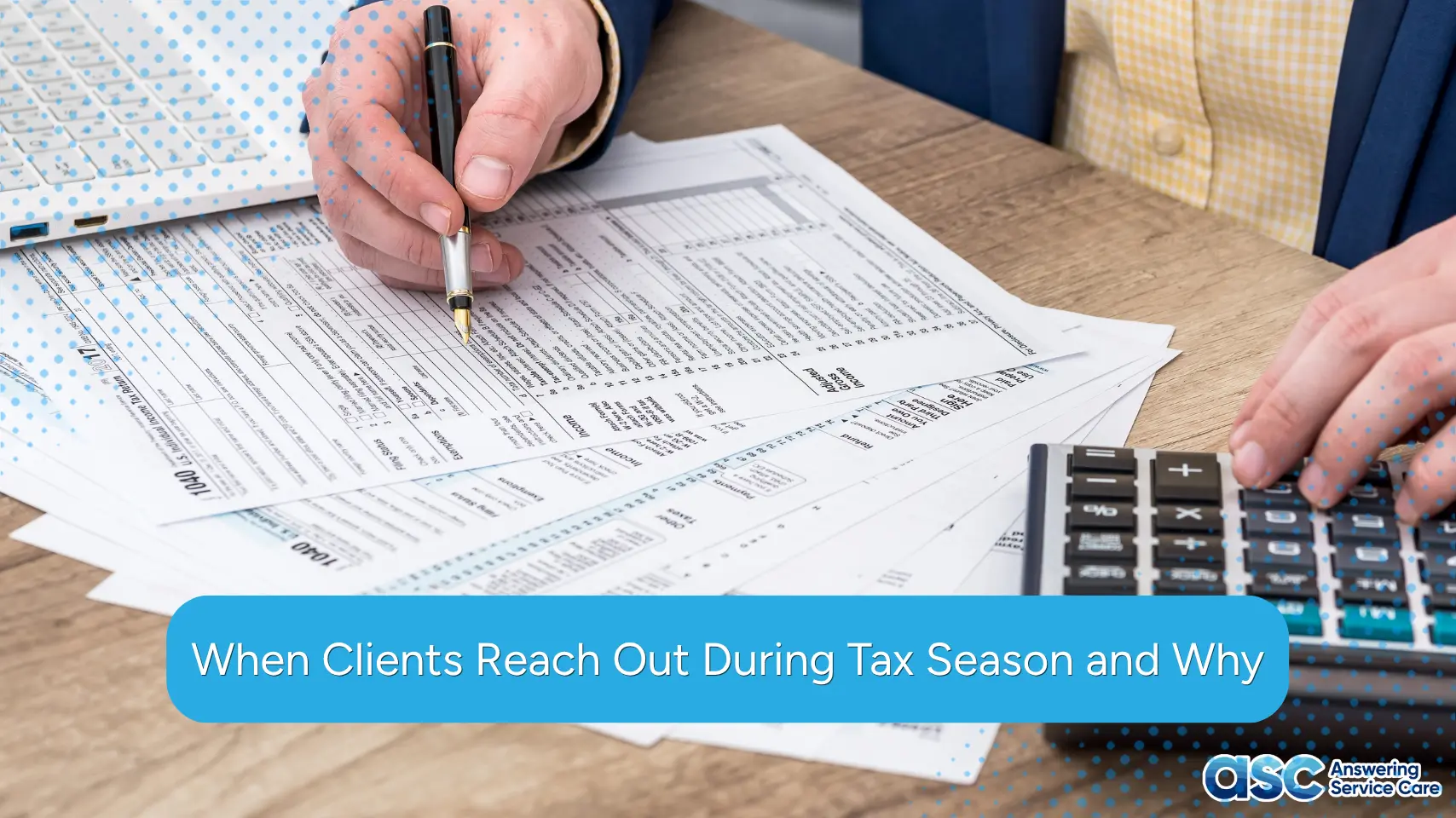

During tax season, clients call most often at document arrival, under filing deadline pressure, and during post-deadline notice periods. Their top concerns include missing paperwork, filing readiness, extensions, penalties, payment plans, refund delays, and reassurance that they are making the right decision.
Tax season brings an influx of calls for financial service providers, but volume alone does not explain what is happening on the phone. For many firms, tax season answering services become a necessary extension of client communication as deadlines amplify uncertainty and financial risk feels more immediate. Conversations shift from simple questions to urgent decisions. Clients seek reassurance and evaluate possible outcomes.
These calls often reflect hesitation rather than confusion. Clients want confirmation before filing, clarity around next steps, and confidence that they are not overlooking something important. The way internal teams handle these conversations can either reduce stress or compound it, especially when they are stretched thin.
Knowing when clients call, what prompts those calls, and how behavior shifts near deadlines helps firms prepare for tax season. Call handling during this period is crucial for protecting trust, reducing repeat calls, and maintaining stable workflows under pressure.
When Does Tax Season Call Volume Spike?
Tax season call volume does not rise evenly. It follows a series of predictable spikes tied to specific moments in the filing cycle, each driven by different client concerns. Early January brings the first wave as clients begin receiving W-2s, 1099s, and other tax documents. These calls tend to focus on preparation questions, missing paperwork, and clarification around what is needed to get started.
As February progresses, more clients transition from preparation to decision-making. This often results in an uptick in calls about filing readiness, deductions, and next steps. These calls reflect growing awareness rather than urgency. Clients assess readiness and weigh options, increasing pressure on front-office staff and on intake and triage support.
The most intense spike typically occurs in late March and early April. Deadline pressure amplifies anxiety, and calls become more emotionally charged. Clients worry about extensions, penalties, payment plans, and last-minute errors. The tone of these conversations often changes, with less patience and a greater need for reassurance, especially when call volume exceeds in-house capacity.
After the filing deadline passes, many firms expect a sharp drop in call volume. In reality, a secondary wave often follows. IRS notices, refund delays, and correction requests generate confusion weeks after filing. These calls often catch firms off guard. Many have reduced staff, making supplemental call handling crucial during this period.
Recognizing the distinct triggers behind each spike allows firms to plan coverage and call handling more strategically. Not every surge requires the same response. Preparing for the why behind the call is just as important as preparing for the when.
| Tax-Season Period | Why Clients Call | Emotional State | Best Call Handling Response |
|---|---|---|---|
| Early Season (Jan) | Missing documents, preparation questions | Mild uncertainty | Clarify requirements, guide next steps |
| Mid-Season (Feb) | Filing readiness, deductions | Cautious evaluation | Confirm readiness, reduce hesitation |
| Deadline Period (Mar-Apr) | Extensions, penalties, payment plans | High urgency and stress | Provide reassurance and clear actions |
| Post Deadline | Notices, refunds, corrections | Confusion and frustration | Explain outcomes and next steps clearly |
Why Do Clients Call for Reassurance During Tax Season?
One overlooked aspect of tax season calls is the difference between information seeking and reassurance seeking. While many clients call with specific questions, a large portion already know the answer they are likely to receive. What they want is confirmation that they are making the right decision.
Reassurance-seeking calls often sound deceptively simple. A client may ask whether an extension is acceptable, even after reading about it online. Another may ask if a payment plan is a reasonable option, despite understanding the basics. These callers are not confused. They are concerned about consequences and seek professional validation.
Treating reassurance calls as basic information requests leads to frustration on both sides. The client may repeat questions or circle back to the same topic, while the person handling the call assumes the explanation was sufficient. Without addressing the underlying concern, the call feels unresolved, which often leads to repeat calls that answering services must absorb during peak season.
During tax season, reassurance becomes part of the service itself. Clients want to feel supported, not rushed. They want acknowledgment that their concerns are reasonable and that their situation is manageable. Calls that provide reassurance tend to be shorter and leave clients more confident.
Firms that recognize this distinction can adjust their call handling, especially during peak periods. Addressing emotional uncertainty alongside factual questions helps reduce repeat calls and preserves trust during a high-stress season.
Why Do High-Stakes Tax Calls Sound Different?
As financial risk increases, client communication changes. Tax season brings heightened sensitivity to risk, especially when conversations involve penalties, payment obligations, or corrective filings. This shift affects what clients ask and how they ask it.
Clients facing potential financial consequences often speak more cautiously. They may phrase questions indirectly, ask hypothetical scenarios, or seek repeated confirmation before committing to a decision. Instead of asking whether they owe penalties, they may ask what typically happens in similar situations. This language reflects discomfort, not lack of knowledge.
Risk perception also affects pacing. Calls slow down as clients process information more carefully. Pauses become longer. Clients may hesitate before responding or ask the same question in slightly different ways. These behaviors signal concern about making an irreversible mistake, which trained answering service agents are often the first to encounter.
When risk is high, clients are also more sensitive to tone. A rushed or transactional response can feel dismissive, even if the information is accurate. Conversely, calm and steady communication helps reduce perceived risk and increases confidence in the guidance provided.
Understanding how risk shapes conversation helps firms respond without overexplaining or unnecessary escalation. Recognizing hesitation as anxiety rather than confusion helps keep calls productive and respectful.
Why Do Tax Season Calls Increase at Night and on Weekends?
Many tax season calls occur in the evenings and on weekends, when clients have time to review documents and address filing concerns. These calls cluster around deadlines, creating urgency during nontraditional hours that rely on after-hours coverage.
Calls received during evenings and weekends frequently involve deadline-driven decisions rather than general information. Clients are often closer to taking action, which changes both the tone and expectations of the conversation.
Because fewer staff are available during evenings and weekends, these calls strain internal resources. Missed calls or rushed conversations during these periods increase risk. A client who cannot reach someone when urgency is highest may delay filing, make poor decisions, or seek help elsewhere.
After-hours tax calls leave less room for miscommunication, as clients are often working against personal or regulatory deadlines. Clarity, confidence, and proper escalation matter most during these windows.
Preparing for deadline-driven behavior requires more than extending hours. It involves ensuring consistent call handling regardless of timing. Clients should receive the same level of confidence and guidance whether they call at noon or late at night.
What Do Silence and Indirect Questions Mean on Tax Calls?
Silence during a tax season call is rarely accidental. Pauses, trailing sentences, and indirect questions signal uncertainty, not disengagement. Clients may hesitate because they are embarrassed, overwhelmed, or afraid of the answer they might receive.
Indirect questions are common when clients fear judgment or financial consequences. Instead of asking directly about penalties or mistakes, they may ask how situations like theirs are usually handled. This allows them to gather information without fully exposing their concern, a pattern trained operators recognize.
Ignoring these signals leads to unresolved calls. When silence is mistaken for comprehension, important concerns remain unaddressed. Clients may leave the conversation still uncertain, increasing the likelihood of follow-up calls or dissatisfaction.
Recognizing silence as a cue creates an opportunity to slow the conversation and offer reassurance. Acknowledging complexity eases tension and encourages clients to speak openly. This approach does not unnecessarily lengthen calls. It often shortens them by resolving the real issue sooner.
For a tax season answering service, effective call handling depends on listening beyond spoken words. Silence and indirect language reveal a client’s mindset.
Frequently Asked Questions
Clients most often ask about missing documents, filing readiness, extensions, penalties, payment plans, and refund timelines. Many also seek reassurance before making final decisions.
Call volume typically spikes during document arrival in January, decision-making periods in February, deadline pressure in late March and early April, and again after filing due to IRS notices.
Clients often repeat questions because they are seeking reassurance rather than new information. Financial risk and uncertainty increase the need for confirmation.
What Do Tax Season Calls Reveal About Client Trust?
Tax season calls offer a concentrated view into how clients respond to pressure, uncertainty, and financial risk. The questions they ask, the timing of calls, and pauses in conversation reveal their level of confidence.
Firms that pay attention to these patterns gain more than operational efficiency. They gain insight into where clients feel vulnerable and where effective communication is most crucial. Handling tax season calls requires more than accurate answers. It requires steady reassurance, attentive listening, and consistent availability, whether calls are handled internally or through trusted answering services.
When firms align staffing, scripts, and after-hours coverage with these call patterns, they reduce repeat calls, protect client trust, and keep tax-season workflows stable. A practical next step is to map coverage by filing phase, including document intake, deadline week, and post-filing follow-up. This approach turns call data into a planning advantage rather than a seasonal challenge.