

In competitive local markets, where customers often call multiple providers in the same city, strong first call resolution can determine which business earns the appointment. First call resolution is often discussed in large call center environments, yet it plays an equally important role in small businesses.
When a team of five or ten people manages incoming calls on small business phones, there is little room for inefficiency. One unresolved issue can trigger repeat calls, scheduling confusion, and missed opportunities. Many owners handle calls internally, often without dedicated tracking tools or structured workflows. That approach can work well in the early stages of growth. Over time, however, DIY call handling without clear measurement can quietly reduce resolution rates, even when conversations feel productive.
As call volume increases, informal processes may begin to affect resolution rates in ways that are difficult to recognize without clear measurement. Understanding what first call resolution means, how to measure it, and how structured tools or a small business answering service can strengthen performance and protect long-term growth.
What First Call Resolution Means for Local Small Businesses
First call resolution in a small business means resolving a customer’s issue completely during the first phone interaction without requiring follow-up calls, repeated explanations, or additional clarification. It reflects both accurate intake and clear communication.
For a contractor, resolution may mean capturing complete job details, confirming availability, and scheduling an appointment before ending the call. In a medical office, it could involve accurately documenting symptoms, verifying insurance information, and clearly outlining next steps. In a legal practice, it may require gathering sufficient intake information so the prospective client does not need to repeat basic details later.
Many service-based small businesses aim for a first call resolution rate of 70-85%, depending on complexity. Highly structured environments may exceed that range, while businesses without standardized intake processes often fall below it
Simply ending the conversation politely is not the same as resolving the issue. Offering reassurance without confirming what happens next leaves room for confusion. True resolution includes clarity, documentation, and shared expectations.
In many small businesses, employees handle calls alongside other responsibilities and without standardized intake systems. That flexibility allows owners to stay close to customers, but it can also lead to inconsistent documentation and unclear follow-up steps. Over time, those inconsistencies affect first call resolution rates. Defining what resolution truly means within your specific workflow creates the foundation for improving it.
How to Measure First Call Resolution Rate in a Small Business
To calculate the first call resolution rate, divide the number of customer issues resolved during the first interaction by the total number of issues received in the same period, then multiply by 100 to obtain a percentage. Tracking repeat calls within 48 to 72 hours helps ensure the calculation reflects true resolution rather than assumed closure.
Even when the first call resolution formula is easy to calculate, inaccurate or inconsistent tracking can distort the results.
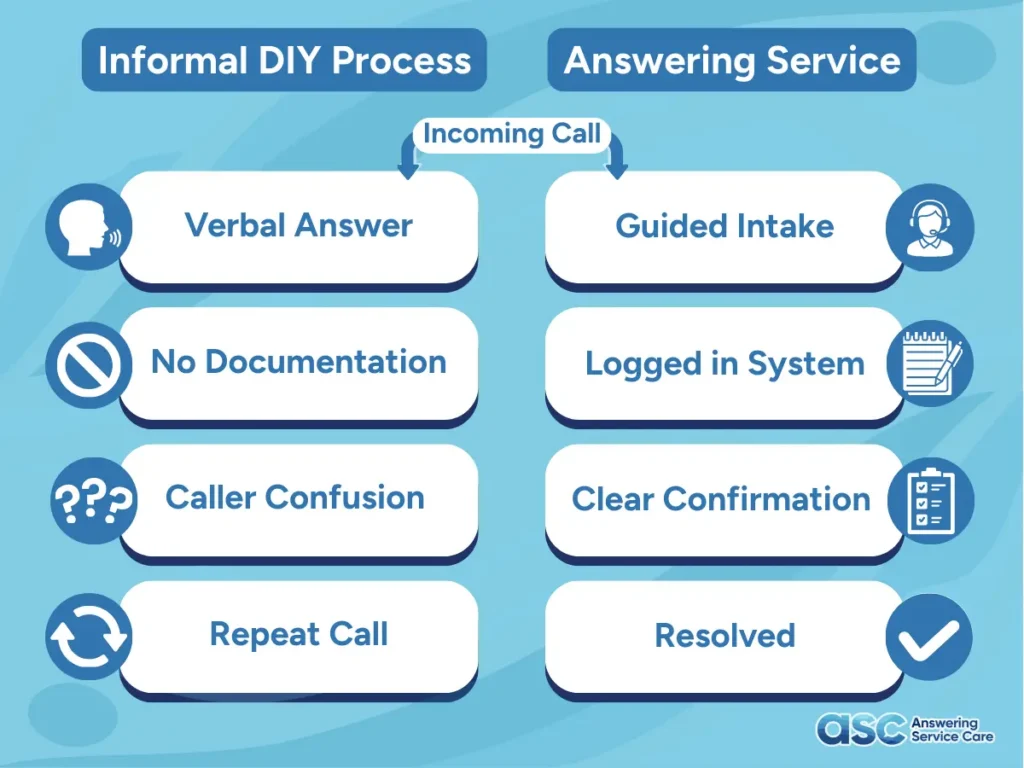
When teams manage calls informally without structured logging tools, they struggle to identify repeat contacts. Owners may rely on memory, handwritten notes, or scattered records. That makes calculating first call resolution unreliable and often overly optimistic. Whether using a CRM, answering service dashboard, or another integrated tracking system, the goal is consistent capture of caller details, issue type, outcome, and required follow-up.
Dashboards and CRM integrations do not replace personal service. They enhance visibility. By centralizing information and tagging repeat callers, they reveal patterns that manual systems may miss. For example, repeat contacts may stem from incomplete intake, unclear scheduling details, or missed confirmation steps.
Reliable tools, clear definitions, and the use of the first call resolution formula provide a more realistic understanding of performance and prevent assumptions from shaping strategy.
Common Reasons First Call Resolution Rates Are Low in Small Businesses
Many small businesses are surprised when they examine repeat call patterns closely. Conversations may feel productive in the moment, yet follow-up contacts suggest something was incomplete.
DIY call handling often depends on the availability and focus of a small number of people. As volume increases, multitasking becomes common. Owners may answer calls during meetings, on job sites, or while handling administrative tasks. In that environment, it is easy to provide quick answers without fully documenting details or confirming next steps.
Incomplete intake is a frequent contributor to repeat calls. Missing addresses, unclear service descriptions, or unverified contact information create friction later. Rushed conversations can also lead to misunderstandings about timelines or expectations.
After-hours gaps add another layer. Calls that reach voicemail may require clarification the next day, effectively turning one issue into multiple interactions. Without structured systems in place, small breakdowns accumulate, reducing first call resolution rates.
Signs that first call resolution may be declining include frequent repeat calls within 48 hours, unclear appointment confirmations, missing intake details, and increased reliance on voicemail after hours.
These patterns are rarely the result of poor intent. They are usually the outcome of growth outpacing informal processes. Identifying these operational stress points allows small businesses to strengthen consistency and improve outcomes.
How Repeat Calls Impact Revenue and Call Capacity in Competitive Local Markets
Repeat calls create inconvenience and directly reduce capacity and revenue. Every additional call tied to an unresolved issue occupies one of your small business phones that could otherwise serve a new lead. Especially in small businesses operating with limited lines or shared extensions, repeat calls can block new inquiries from reaching a live person.
In industries such as personal injury law, primary care clinics, HVAC services, and property insurance claims, limited line availability can translate into lost opportunities. Staff must revisit conversations, recheck schedules, and correct documentation, which increases administrative strain.
DIY call handling without integrated systems or professional answering support can amplify this effect. When documentation is inconsistent or dispersed, team members spend additional time searching for information. That slows response times and increases the likelihood of further clarification calls.
Repeat contacts also complicate scheduling and workflow management. If intake was incomplete or expectations were unclear, adjustments create unnecessary back-and-forth. Over time, these inefficiencies limit growth and increase internal pressure.
From the customer’s perspective, multiple contacts to resolve a single issue can reduce confidence. Protecting first call resolution safeguards operational efficiency, eases pressure on small teams, and creates a smoother client experience.
Best Practices to Improve First Call Resolution in Small Businesses
Improving first call resolution requires intentional structure rather than simply answering faster. Guided scripts help businesses consistently capture essential information. They reduce reliance on memory and create a predictable intake experience. Standardized documentation, supported by dashboards or CRM integrations, ensures that information is accessible to everyone who needs it. When properly integrated with small business phones, these tools provide visibility into every interaction and reduce the likelihood of repeat calls.
Defined escalation pathways further support resolution. When a question exceeds the authority of the person answering, there should be a clear process for routing, documenting, and confirming follow-up. That clarity prevents callers from feeling uncertain about next steps.
After-hours coverage and documentation continuity also play a role. When staff handle live calls and record them accurately outside standard business hours, the next day begins with context rather than confusion. That continuity reduces repeat interactions and strengthens overall efficiency.
Improving first call resolution in a small business typically requires three shifts: clearer intake structure, consistent documentation, and real-time visibility into call outcomes.
DIY call handling does not need to disappear as a business grows. What often changes is the level of structure and tool support surrounding it. For many growing companies, partnering with a professional answering service that integrates with existing CRM systems and small business phones improves consistency without sacrificing internal visibility.
For small businesses evaluating whether internal call handling supports growth, tracking first call resolution alongside call volume and conversion rates provides a clearer picture of operational health.
Why First Call Resolution Rates Matter for Small Business Growth
First call resolution goes beyond a basic customer service statistic. In a small business, it reflects the strength of internal systems and communication practices. When calls are resolved clearly and completely during the first interaction, teams protect limited time, maintain line availability, and create stronger client experiences.
Handling calls internally without dedicated tools can feel efficient and cost-effective during early growth stages. As call volume increases, however, informal processes begin to show strain. Missed documentation, unclear follow-up steps, and multitasking gradually increase repeat contacts and reduce capacity.
By clearly defining resolution, consistently applying the first call resolution formula, and implementing structured tools that support visibility and documentation, small businesses gain a more accurate picture of performance. Strong first call resolution signals operational readiness, supports sustainable growth, and positions the business to scale without sacrificing clarity or service quality.