


Reflect on your first job interview. You likely spent time choosing the right outfit, researching the company, and practicing your answers until they felt natural. That preparation mattered because it shaped how you were perceived before the conversation ever truly began.
Every phone call works the same way. When someone calls your business, they form an impression almost immediately. The greeting they hear, how quickly the call is answered, and how clearly the conversation unfolds all influence their confidence in your organization. Today’s callers expect efficiency, accuracy, and professionalism from the very first moment, making a well-written phone script an essential part of your operations.
A strong script creates consistent language and reinforces a shared approach across the team. It reduces hesitation, improves response time, and gives your team confidence during both routine and high-pressure calls. Whether calls are answered in-house or by an answering service, a clear structure ensures consistency across every interaction. Like any effective communication tool, a phone script has three essential parts: a clear introduction, a focused body, and a reassuring conclusion.
Setting the Tone Immediately
The introduction is the first human moment of the call. It confirms that the caller reached the right place and signals that their time and concern are being taken seriously. An effective opening should clearly identify the business and the person or service answering the phone.
A generic greeting can feel uncertain or rushed. A clear and confident introduction reassures callers that they are speaking with someone who is prepared to help. This is especially important for callers who are stressed, calling outside normal business hours, or dealing with time-sensitive issues.
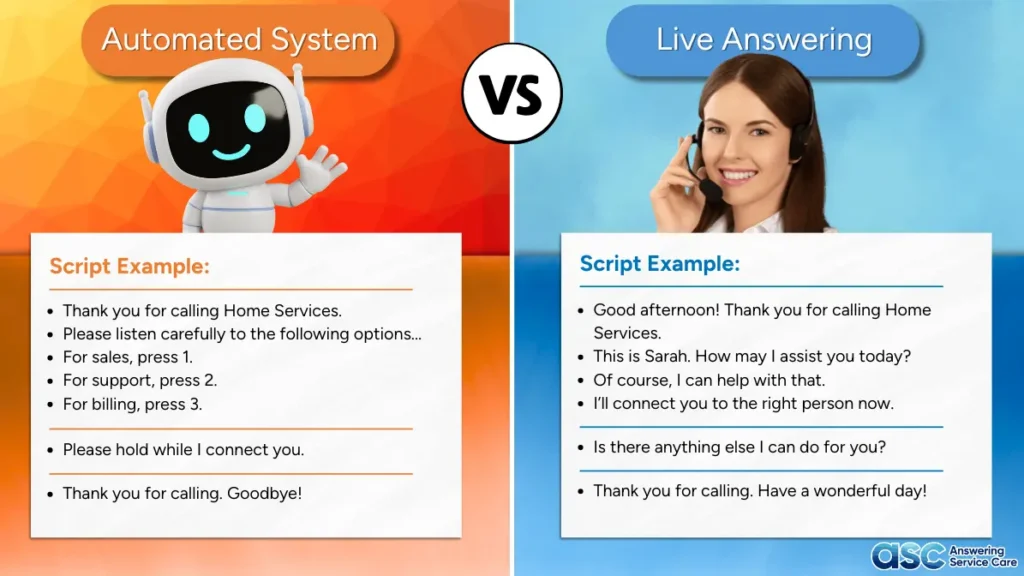
Many businesses strengthen this first impression by using personalized recorded greetings before the call is answered. These greetings can confirm the business name, communicate hours of operation, and provide emergency instructions before routing the call to a live representative. This reduces confusion, shortens call handling time, and ensures that important information is delivered consistently and accurately.
Sample Script for Answering Phone Calls
Personalized greetings are particularly valuable for medical practices, legal offices, and service-based businesses that rely on answering services for after-hours or overflow coverage. When callers know where they are and what to expect, the live conversation can begin smoothly and efficiently.
Smart Business Tip #1
Use your resources to your advantage. Tools like customized greetings, trained receptionists, and professional answering services help ensure every caller is acknowledged promptly and accurately. When callers hear a clear, polished introduction, it signals that their time matters, which immediately creates a sense of respect and trust.
Gathering Information With Purpose
The body of the call is where information is exchanged, and trust begins to take shape. This is when the caller explains their reason for calling, and the receptionist or answering service gathers the details needed to take action.
Clear guidelines are critical at this stage. A well-designed script helps call handlers know which questions to ask, what information is required, and when to escalate or transfer a call. This structure reduces errors and reassures callers that their concern is being handled carefully and professionally.
Scripts are especially valuable during periods of high call volume, staffing changes, or after-hours coverage. When calls surge or unfamiliar team members are answering phones, a script provides stability and consistency. It ensures that important details are not missed, even when conditions are unpredictable.
At the same time, scripts are meant to support, not replace, human judgment. The goal is not to sound rehearsed, but to provide a framework that allows conversations to adapt naturally to the caller’s situation. Call handlers should understand why each question is being asked so they can adjust tone and pacing as needed, particularly during sensitive or urgent calls.
Smart Business Tip #2
Do not overdo it. Asking too many questions can leave callers feeling overwhelmed or impatient. Create a script that focuses on collecting essential information while maintaining an efficient and easy-to-follow conversation.
Ending With Confidence and Reassurance
How a call ends often determines how it is remembered. A rushed or abrupt goodbye can undo an otherwise positive experience, while a thoughtful closing reinforces trust and professionalism.
An effective closing confirms that the caller was heard and clarifies the next steps. It should leave no doubt that their message was recorded and who will follow up. Including the call handler’s name and a brief expression of appreciation helps humanize the interaction and makes the business more memorable.
Closings are particularly important for calls involving urgency, concern, or follow-up. When callers hang up with clarity and reassurance, they are less likely to call back for confirmation and are less likely to feel frustrated by uncertainty.
Smart Business Tip #3
Have a friendly, calm, and approachable person answering your phones. If you outsource to an answering service, ensure their representatives are trained to communicate with warmth and professionalism. A strong closing leaves callers feeling supported rather than dismissed.
Accountability and Follow Through Matter
A well-written script does not end with politeness. It also establishes accountability. Callers want to know that their message will reach the right person and that action will follow.
Scripts that include confirmation language and next step cues help prevent misunderstandings and reduce repeat calls. They also create internal clarity by ensuring everyone involved knows their responsibility after the call ends.
Smart Business Tip #4
Build accountability into your script. Callers should always understand what happens next and who is responsible for the outcome. Clear confirmation at the end of a call reinforces trust and reduces uncertainty.
Bringing It All Together
A phone script is more than a collection of phrases. It reflects how your business communicates, prioritizes, and manages risk. Without a clear script, calls take longer, important details are missed, and callers are left uncertain about next steps. Over time, these minor breakdowns can lead to frustration, a loss of trust, and reputational damage.
A strong introduction sets expectations, a focused body ensures accuracy and efficiency, and a confident conclusion reinforces trust and accountability. When your script is designed with real operational conditions in mind, including call surges and after-hours coverage, it becomes a safeguard rather than a formality.
If your phone script has not been reviewed recently, it may be time to review it again. Thoughtful updates can improve caller satisfaction, reduce friction, and ensure every call represents your business with clarity, professionalism, and care.