
When someone contacts your business, especially by phone, they often do so in a moment of uncertainty, frustration, or need. How you respond in those first few seconds has an outsized influence on what happens next. Customers might not remember every word you say, but they’ll remember how you made them feel. Empathy plays a key role in shaping that experience.
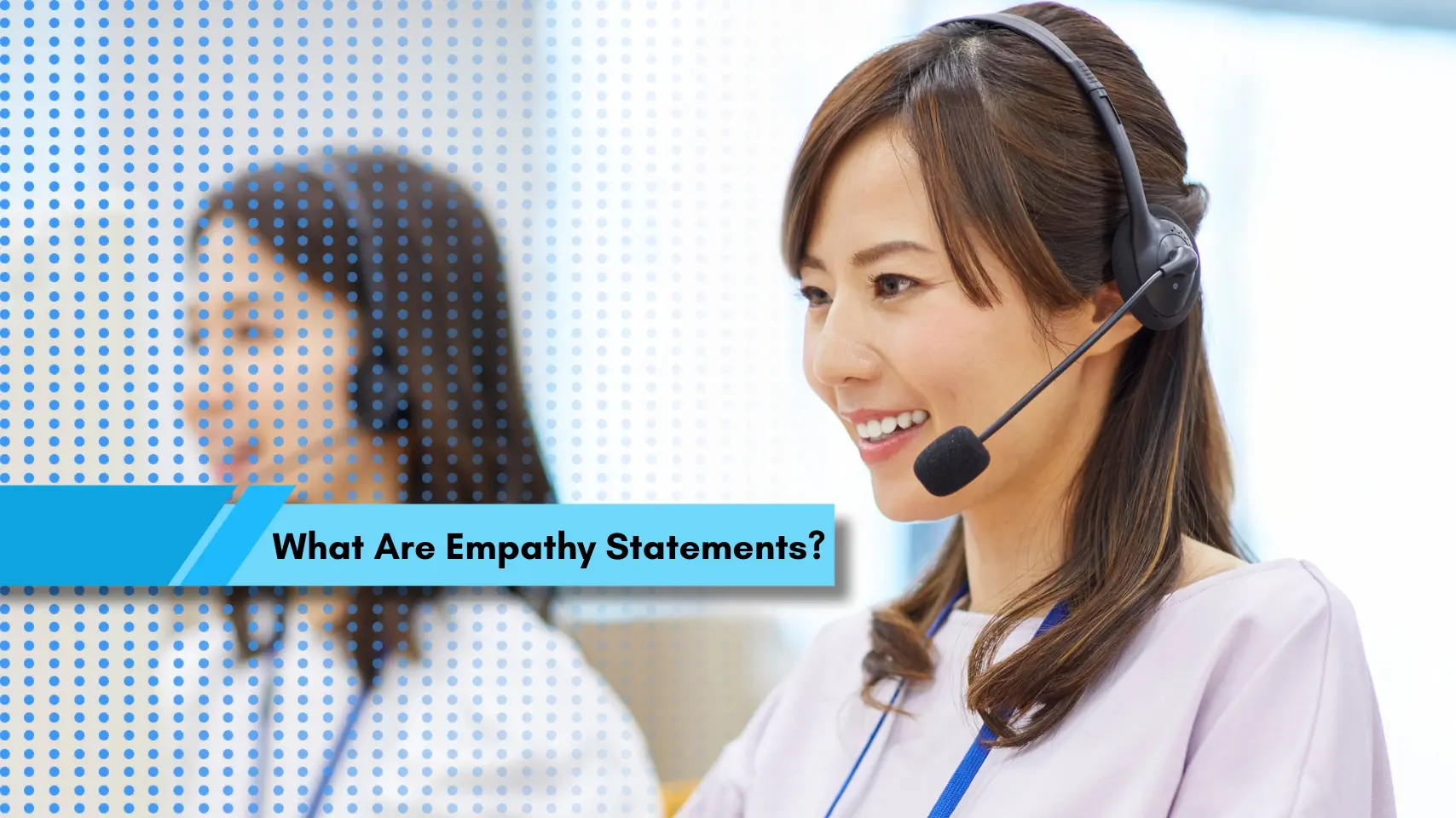
An empathy statement is a verbal expression that acknowledges a caller’s emotions. It helps to validate their experience, whether it’s confusion, concern, or urgency. Phrases like “I completely understand how that could be frustrating” or “I’d feel the same way in your shoes” aren’t solutions; they’re the foundation on which trust is built.
For answering services, empathy statements are more than just good manners. They’re tools that guide conversations, ease tension, and create a sense of partnership. When operators show empathy early, calls tend to go more smoothly. The caller feels heard, the operator stays in control, and the business earns points for professionalism, often without the caller even realizing why the experience felt so reassuring.
But genuine empathy goes beyond repeating phrases from a script. It involves tone, timing, and careful listening. When used well, empathy statements make your business sound more human, more competent, and more aligned with your customers’ needs.
When Empathy Feels Genuine, Callers Respond
One of the most common mistakes businesses make is assuming that empathy can be standardized. They equip their staff or third-party agents with a list of scripted phrases that sound caring in theory but feel robotic in practice. Callers can tell. They know when they’re being handled versus when they’re being heard.
A genuine empathy statement is responsive to the situation. It mirrors the caller’s tone without escalating it and signals that their emotions are valid. For example, if a customer says they’ve been waiting for a shipment that’s now three days late, an operator might say, “Thanks for letting me know. It makes sense you’d be frustrated. Let me see what’s happening on our end.” That’s very different from a default line like “I’m sorry for the inconvenience,” which can sound like a brush-off if not delivered with care.
Tone matters just as much as the words themselves. A warm, measured tone can defuse frustration even when you’re not offering an immediate solution. A rushed or flat tone can have the opposite effect, even with the “right” words.
High-performing answering services know this, and they train for it. Operators are encouraged to actively listen, paraphrase what they’re hearing, and respond in ways that make the caller feel like they’re not just part of a transaction, but a priority. This thoughtful communication builds goodwill even when the issue can’t be resolved immediately.
When callers believe the person on the other end genuinely understands them, they’re more likely to stay calm, follow instructions, and end the call feeling supported. And that feeling becomes part of how they view your business going forward.
The Link Between Empathy and First Call Resolution
First call resolution (FCR) is often treated as a logistics metric. Did we answer the question or solve the problem on the first attempt? However, underneath that data point is a much deeper dynamic: whether the caller trusted the person they were speaking with enough to accept the resolution provided.
Empathy is a key driver of that trust. Research from customer service platform Dixa shows that 96% of customers view empathy as critical. This statistic underscores its role in resolving issues effectively on the first call. It’s not necessarily that the agent lacks knowledge or authority. It’s that the emotional environment of the call isn’t supportive of a productive outcome.
When empathy is present early in the conversation, it reduces defensiveness and encourages openness. A caller who feels acknowledged is likely to explain their issue clearly, listen to options, and collaborate on a solution. That clarity makes it far easier for operators to get to the root of the problem and solve it effectively.
Empathy also reduces the chance of miscommunication. When agents repeat what they’ve heard or check for understanding, they signal that the caller’s words matter. That small gesture can prevent a minor issue from turning into a repeat call, a bad review, or an escalation to management.
Answering services that emphasize empathy in their training often see stronger FCR performance as a result. They don’t rush callers to a resolution but make space for the caller to be heard. When that happens, people don’t just accept solutions more easily. They positively remember the experience.
Supporting Empathy Means Supporting Your Team
Empathy is powerful, but it requires energy. Listening attentively, staying patient, and engaging sincerely with each caller, especially when those callers are stressed or upset, demands emotional labor. When that labor isn’t acknowledged or supported, it can lead to empathy fatigue.
Empathy fatigue is a form of emotional burnout. It doesn’t come from answering phones or following procedures. It comes from constantly absorbing someone else’s stress without adequate time, support, or space to process it. Over time, this can lead to frustration, disengagement, and a noticeable drop in the quality of communication.
Businesses that rely on internal staff to answer every call, particularly with high-stakes or after-hours calls, may see empathy fatigue without knowing what to call it. Staff members become short-tempered with callers, calls take longer, and minor issues feel overwhelming. Then turnover starts to climb.
That’s why many organizations choose to partner with professional answering services. These services create an environment where empathy can thrive without draining operators. Schedules are managed for consistency. Workflows are optimized to reduce friction. Supervisors are trained to spot signs of overload and intervene before it becomes burnout.
In short, answering services not only deliver empathy to your callers but also protect the people providing them. That’s good for service quality and business continuity.
And even beyond burnout prevention, there’s another benefit: when your team isn’t interrupted by emotionally demanding calls all day, they can focus on high-value work. You preserve your internal energy while giving your customers the attentive, thoughtful experience they deserve.
Training Empathy as a Professional Skill
Another common misconception is that empathy is something you have or you don’t. In reality, empathy can be developed, just like listening, problem-solving, or technical proficiency.
Leading answering services train their staff to use empathy with precision. That means reviewing scripts, role-playing different types of callers, learning to recognize emotional cues over the phone, and practicing acknowledging concerns without making promises you can’t keep.
For instance, if a caller is angry that a technician hasn’t shown up, an untrained operator might panic and promise an immediate fix. On the other hand, a trained operator might say: “You were told someone would be there by now, and I understand how upsetting that is. Let me check the status and find out what’s happening.” That statement communicates care and commitment without overstepping.
Operators also learn how to manage their own emotions. Not every call will be pleasant, and not every caller will be reasonable. But with the right tools and mindset, operators can remain calm, grounded, and constructive, even when the conversation is difficult.
This level of training benefits your callers, your brand, and your business reputation. It turns routine interactions into memorable ones, ensuring that every caller still feels like a priority even on your busiest days.
Turning Routine Calls into Meaningful Moments
Empathy statements are more than phrases. They’re signals. They tell your caller, “We’re listening. We care. You matter.” That’s not just good customer service. That’s the kind of brand experience people remember and talk about.
Empathy woven into your answering service improves resolution rates, boosts customer satisfaction, and reflects well on your business at every touchpoint. But just as importantly, it supports the people doing the work. Empathy is sustainable when supported, coached, protected, and practiced purposefully.
In the end, it’s not about being perfect on every call. It’s about being present. And when your business sounds present, human, and engaged, even for a few seconds, it leaves a lasting impression.