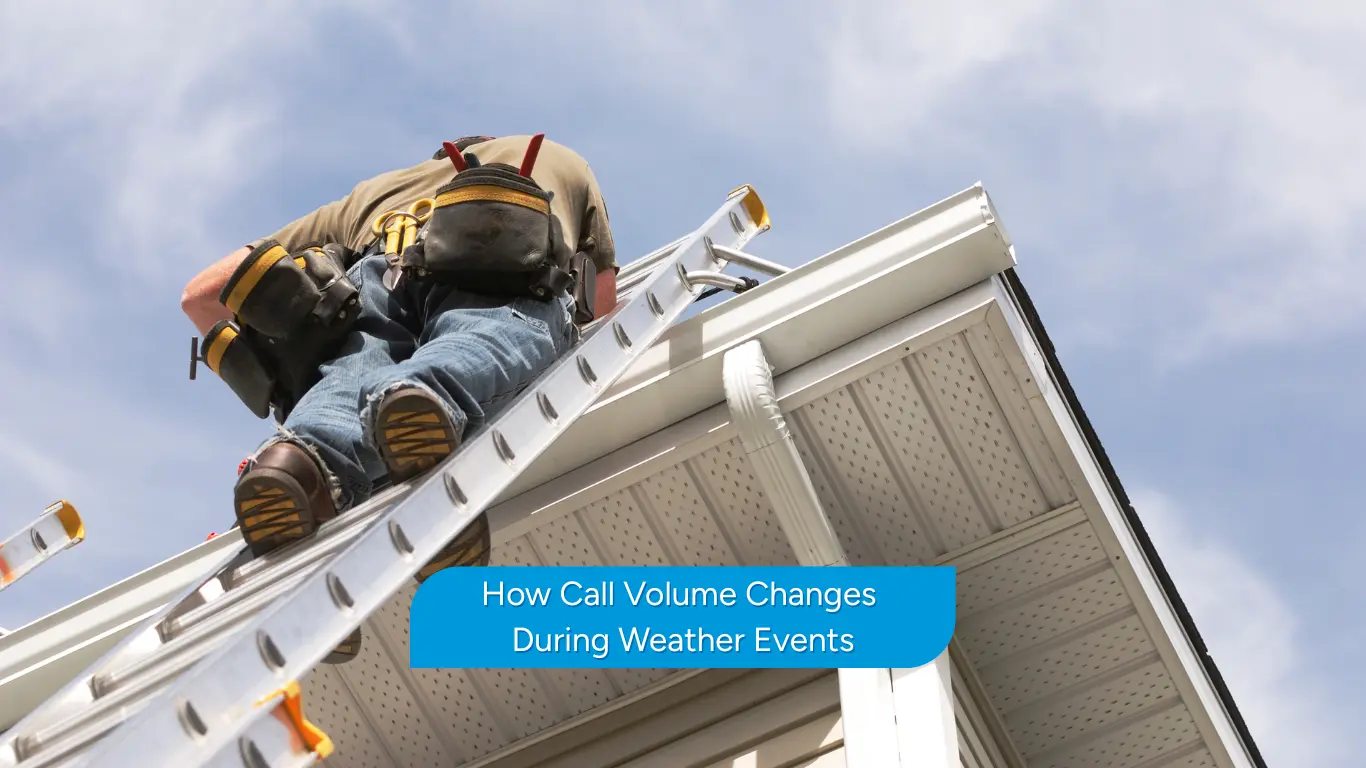

For home service businesses, weather is one of the biggest variables affecting daily operations. A single storm can transform a quiet schedule into a flood of urgent calls from homeowners requiring immediate assistance. When conditions worsen, call volume often doubles within hours, stretching both office staff and technicians to their limits.
Research shows that during times of stress, customers value responsiveness above all else. That expectation becomes even sharper during bad weather events, when every unanswered call feels personal. Businesses that know how call volume shifts before, during, and after storms can better protect revenue. They can also manage expectations and maintain trust when customers need help the most.
An answering service for contractors can play a crucial role in this preparation by helping businesses stay accessible, manage overflow calls, and maintain professionalism when demand suddenly increases.
How Weather Affects Caller Urgency
When comfort or safety is at risk, a homeowner’s sense of urgency escalates fast. A furnace failure during freezing temperatures or a roof leak in heavy rain transforms a minor inconvenience into an emergency. Research from the American Psychological Association shows that anxiety and perceived time pressure increase significantly during stressful or uncertain events, driving people to seek immediate reassurance.
That urgency extends to the phone. A joint study by Harvard Business Review and MIT/InsideSales found that leads contacted within five minutes are much more likely to convert. In fact, the chances of qualification drop sharply after just half an hour. In weather-related situations, anxiety can heighten. Answering quickly or calling back later can significantly influence whether a customer chooses your company over a competitor.
An answering service can help maintain that responsiveness when internal teams are focused on dispatching crews or managing emergencies. Trained operators ready to respond ensure that they acknowledge every caller without delay, capture their details with precision, and help the company preserve trust even during periods of peak demand.
Call Types That Shift During Events
The nature of calls changes with the weather. Before a major storm, customers focus on prevention, like checking gutters, servicing HVAC systems, or inspecting roofs. Once the storm arrives, the tone shifts to immediate repairs and damage control.
Heating and cooling contractors, for example, often see a sharp rise in emergency calls within a day of a temperature drop. Roofers and plumbers experience similar surges during prolonged periods of rain or freezing temperatures. Anticipating these changes allows businesses to prioritize urgent requests and record lower-priority ones for follow-up once conditions stabilize. Answering services can assist by tagging calls based on urgency and routing critical ones to the right team quickly.
After-Hours Volume Surges
Storms rarely wait for business hours. Many occur overnight, when offices are closed and staff are unavailable. Homeowners dealing with a burst pipe at 2 a.m. or a power outage before dawn still expect someone to answer, even if service cannot begin immediately.
Recent call tracking research highlights the importance of that first response. CallRail reports that up to 85 percent of customers do not call back if their initial call goes unanswered, and Invoca data suggests that only a small fraction of callers ever leave a voicemail. When urgent situations arise, that drop-off becomes even steeper. If no one picks up, most customers simply move on to the next company.
Having live coverage in place after hours ensures that professionals answer every call, accurately record messages, and inform customers that their issue will be addressed as soon as possible. In severe weather events, that immediate reassurance can mean the difference between keeping a loyal customer and permanently losing them.
Lead Quality vs. Lead Quantity During Crises
During major weather events, calls increase rapidly, but not all of them are from qualified leads. Some homeowners call multiple providers simultaneously or are simply exploring their options. Without structure, technicians can waste valuable time following up on non-urgent inquiries. Research on consumer behavior during crisis periods shows that urgency and anxiety lead to more contact attempts, but also to less deliberation in decision-making.
That means your incoming queue might grow rapidly, but the percentage of actionable leads (those ready to schedule now) may not rise at the same rate. Having a process in place to distinguish between high-intent calls and lower-intent inquiries becomes critical. Live call intake or overflow support via an answering service can assist by asking key qualification questions, such as location, urgency, and readiness to schedule. This ensures that your field team focuses on callers with the highest likelihood of conversion, rather than just the highest volume.
Predictable vs. Unpredictable Spikes
Some call surges are easy to anticipate, such as frozen pipes during a cold snap or A/C failures during a heatwave. Others happen without warning. Sudden hail, heavy rain, or unexpected freezes can overwhelm small teams with little time to prepare.
Recording past call spikes can reveal useful patterns. These insights, when combined with local weather data, enable business owners to predict when they will require additional coverage. An answering service that offers overflow support can handle sudden spikes. This keeps customers connected while the field team focuses on urgent tasks.
Weather-Driven Scheduling Bottlenecks
Once calls start pouring in, scheduling often becomes the next obstacle. Customers dealing with active damage usually expect same-day service, even when the entire region is experiencing the same conditions. Without a system for managing expectations, those delays can quickly lead to frustration.
When call volume outpaces available technicians, centralized handling becomes essential. Answering services that integrate with scheduling software can confirm appointments, communicate accurate time frames, and prevent double-booking. Clear updates and realistic timelines help maintain customer trust when the schedule is full.
Data Visibility in a Crisis
Every storm leaves behind valuable data. Each call provides insight into how customers respond, which areas generate the most demand, and how service teams perform under pressure. By reviewing these details, businesses can refine staffing, inventory, and communication strategies for future events.
Professional answering services, such as Answering Service Care, offer straightforward reporting tools that simplify this process. Tracking patterns over time helps business owners anticipate call surges, rather than reacting to them, and turn unpredictable weather into a more manageable part of their planning process.
Turning Weather into Opportunity
Storms test every part of a home service operation, from staffing to scheduling to customer patience. But they also reveal what customers value most: availability, empathy, and fast response. Businesses that stay organized and reachable during those high-pressure moments often gain lifelong clients who remember who answered when no one else did.
Answering services help make that possible by keeping lines open, filtering calls, and capturing useful data that can guide future planning. While no one can control the weather, every business can control its readiness. And when preparedness meets responsiveness, even the toughest storm can become an opportunity to strengthen reputation and foster customer loyalty.