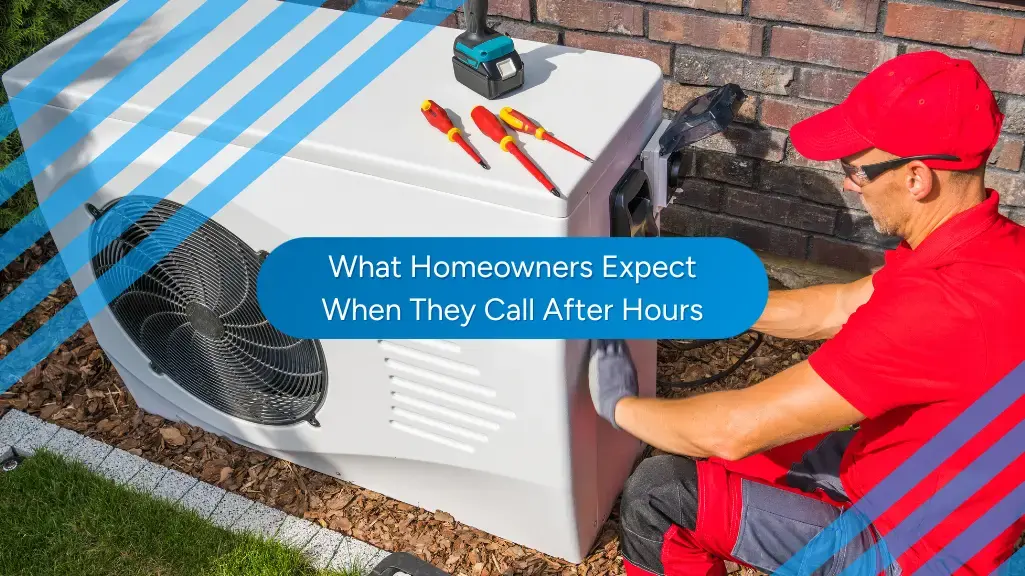

For most homeowners, emergencies rarely happen during regular business hours. The pipe bursts at 11 p.m., the heater fails in freezing weather, or a circuit begins sparking while everyone is asleep. In these moments, people want clear direction and reassurance that help is on the way.
When the phone rings after hours, customers expect prompt and attentive communication, as well as clear direction. Even if the actual repair must wait until morning, they want to know that someone has acknowledged and logged their situation. Home service companies that manage these calls effectively show customers that reliability extends beyond the workday.
A defined after-hours process helps businesses maintain calm and reliable responses. It reduces confusion, improves technician response once the work begins, and demonstrates to the customer that someone is in control of the situation. Using a contractor answering service helps make that process seamless, keeping communication clear even when staff are off the clock.
The Customer’s Version of Urgency
Most homeowners do not think in terms of office hours. They think in terms of urgency. When a plumbing line bursts or an air conditioner stops working, their focus shifts from when the office opens to how quickly someone can respond.
Many homeowners reach out in the evening, often after the workday ends, when problems feel most urgent and immediate help seems out of reach. These callers often tried to reach someone before the end of the day but were unable to get through to them. When that happens, they rarely wait until morning. They simply call another company that appears ready to help.
Businesses that plan around this behavior capture more opportunities without exhausting their staff. Extending live response slightly beyond closing or partnering with a professional answering team can make the difference between retaining a customer and losing them to a competitor. The goal is not nonstop operation, but dependable accessibility during the hours when urgency peaks.
The Triage Behind Every Emergency Call
When an emergency call arrives, the most valuable tool is structure. Customers may describe what they see in vague or emotional terms, and it is up to the responder to accurately interpret those details. A clear triage process allows staff to handle every call with precision and empathy.
Strong triage begins with calm, specific questions that guide the conversation. Asking whether the leak has stopped, whether the main water line is shut off, or whether the odor of gas is present helps determine the level of urgency. An answering service that supports trades can reinforce this process by automatically routing the most critical calls to on-call technicians while logging lower-priority issues for next-day response. These details enable the responder to assess whether to dispatch a technician immediately or schedule one for the next day.
This process keeps technicians safe from late-night calls. It also ensures that real emergencies receive prompt attention. This enables providers to maintain a consistent record of how managers report incidents, allowing them to identify patterns and implement operational improvements over time.
When Missed Calls Cost More Than Missed Revenue
An unanswered phone call poses a greater risk than many home service businesses realize. Data from Invoca shows that roughly one-quarter of inbound calls never get answered, and in some sectors the rate exceeds 60%. For home service providers, where emergencies often trigger new customer relationships, those missed calls represent significant lost revenue.
The outcome rarely ends with voicemail. Research from Grasshopper indicates that approximately 80% of callers hang up when they believe they are being sent to voicemail. And HighLevel reports that roughly 62% of calls to small businesses go unanswered, resulting in many customers contacting another provider instead. In moments of urgency, whether a burst pipe, an electrical issue, or a broken air conditioner, people simply move on to the next company that answers.
Each missed opportunity also carries a reputational cost. Negative reviews often mention unreturned calls or a lack of response, even when the company performs excellent work later on. Maintaining consistent after-hours coverage prevents those moments of silence from turning into long-term brand damage. Responsiveness builds confidence, and confidence keeps customers from looking elsewhere the next time they need help.
Protecting Your Business Through Documentation
Every after-hours emergency call creates a record of communication that carries both operational and legal importance. Documenting the time of the call, the message taken, and any escalation steps provides protection for both the company and the customer.
If a homeowner later claims that a call went unanswered or that a technician failed to respond, clear documentation can resolve the issue immediately. Time-stamped call notes and escalation logs show that the company followed procedure. This transparency is especially valuable when insurance claims or liability questions arise.
Accurate records also help insurers and property managers assess events objectively. For example, a technician’s documented arrival time or the precise language of a customer’s report can confirm compliance with safety and reporting standards. Beyond risk management, these records improve internal consistency. They enable managers to review process quality, identify communication gaps, and enhance accountability across shifts.
Turning Late-Night Calls into Lasting Relationships
Emergency calls present a rare opportunity to create strong customer relationships. A homeowner who reaches a real person during a stressful moment will remember that experience long after the repair is complete. The sense of relief that comes from hearing a calm, capable voice often becomes the foundation for future loyalty.
Follow-up plays an essential role in reinforcing that connection. A quick call or message the next day to check whether the situation was resolved leaves a lasting impression. It signals care and professionalism without requiring a major time investment.
Companies that view after-hours interactions as opportunities for building trust tend to experience higher retention and referral rates. Even when the job itself is simple, the memory of receiving support during a difficult situation encourages customers to return. Over time, these small gestures create a reputation for dependability that no advertisement can replace.
Reliability That Works Around the Clock
Emergencies reveal how well a business communicates when conditions are unpredictable. The ability to stay organized, document accurately, and reassure customers defines the experience more than the repair itself.
Reliability after hours depends on structure and follow-through. When businesses implement clear triage procedures, maintain documentation, and treat late-night callers with genuine respect, they earn trust that lasts. Partnering with a professional answering service helps sustain that reliability by maintaining consistent communication even when staff are unavailable. Homeowners remember the calm voice that answered, the professionalism shown, and the confidence they felt when the situation was uncertain.
What customers really need after hours is confidence that someone will respond, record their concern, and guide them toward a solution. Businesses that consistently meet this need stand out in their communities as dependable partners, not only during emergencies but every day thereafter.