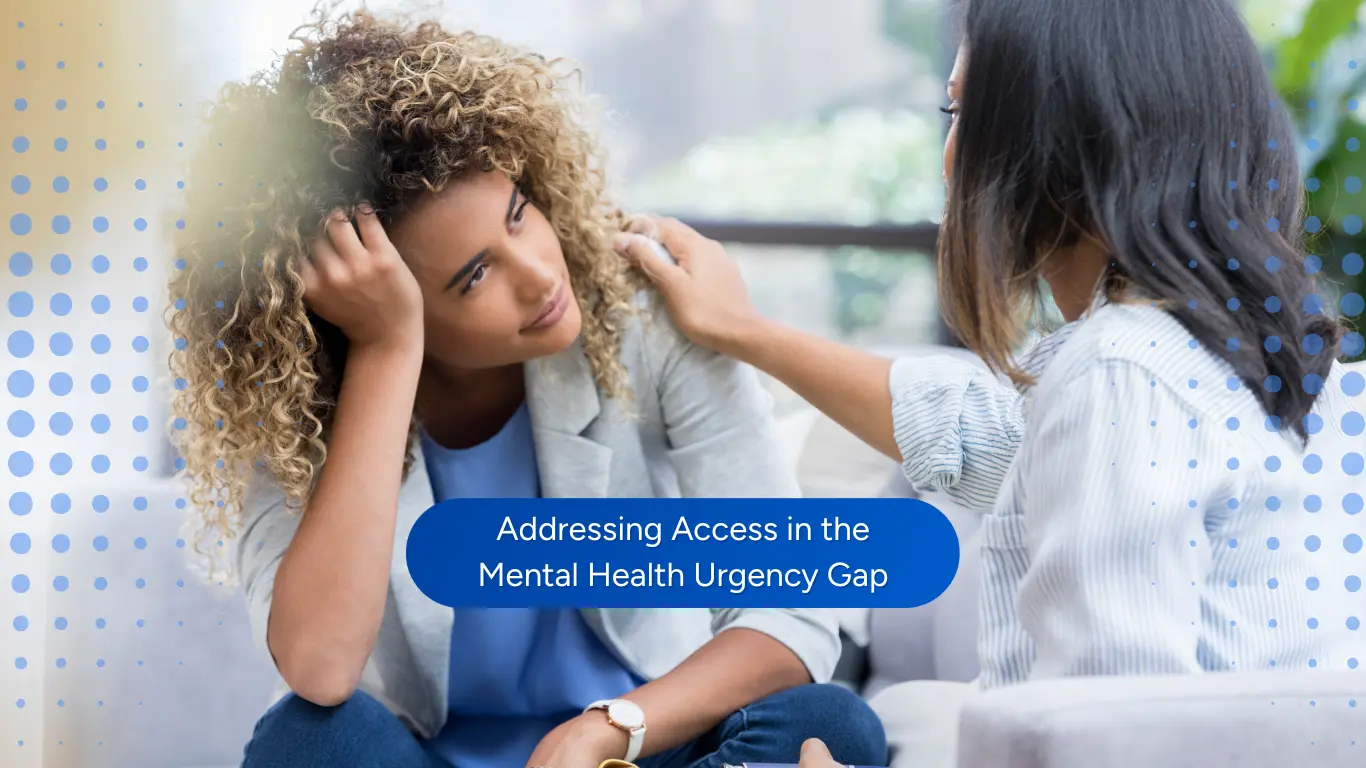

Across the world, more than one billion people live with a mental health condition, yet most never receive adequate care. The World Health Organization has identified this shortfall as one of the most pressing health issues of our time. For mental health clinics, the urgency gap is a tangible and pressing issue. It appears every day in the form of long waitlists, unanswered calls, exhausted staff, and patients who never connect with treatment.
Addressing the urgency gap requires more than new funding or added facilities. It also requires practical steps that protect access right now. Small operational improvements, such as using a medical answering service, can make a significant difference. By answering the phone consistently and reducing delays, you can keep patients engaged. Otherwise, they might walk away from care altogether.
Defining the Urgency Gap in Mental Health
The urgency gap refers to the striking difference between the global need for mental health care and the limited capacity of clinics and providers to deliver it. Patients often wait weeks or months for an initial appointment. In some cases, they never connect with care at all.
Research has shown that delays in mental health treatment are clinically significant. A large population study found that many people wait years after first experiencing symptoms before making initial contact with a provider. Those who do connect often face further administrative or scheduling barriers. Long waits for therapy or psychiatric services lead to worse outcomes. In contrast, quick access enhances recovery rates and helps individuals return to work more quickly.
For clinicians, this gap is not a matter of lacking resources. It is watching demand grow while knowing that delays in access actively worsen the conditions patients are seeking help to manage.
The Critical First Call in Mental Health
In behavioral health, the first call carries unique weight. Help-seeking is a fragile process, shaped by stigma, uncertainty, and hesitation. A caller may spend days building the courage to reach out, only to hang up if they meet a voicemail, a long hold time, or a rushed interaction.
Studies confirm that even motivated individuals face barriers to following through with treatment. Mental health literacy gaps, cost concerns, and the intention–behavior divide all contribute to a high rate of disengagement. When the very first point of contact fails, patients are unlikely to try again, leaving symptoms untreated and needs unmet.
This is where reliable phone access can have a protective effect. A trained answering team can quickly capture calls. They provide reassurance and set clear expectations. Most importantly, they can schedule or triage right away. That first impression can mean the difference between someone beginning their treatment journey or retreating back into silence.
Wait Times and Their Clinical Consequences
In mental health care, time has a direct impact on outcomes. Longer waits have been associated with worse clinical results at one year, and national studies show that shorter waits for psychological services increase the likelihood of patients returning to work. These findings emphasize that wait time is not simply an operational inconvenience but rather a clinical variable that affects recovery.
Outpatient psychiatry programs with telehealth options reported fewer no-shows and better provider productivity. The lesson is clear: Reducing wait times through scheduling efficiency, telehealth, or streamlined intake benefits both patients and clinics. A timely appointment is a clinical safeguard.
Patient Abandonment in Mental Health Versus Other Specialties
Every medical specialty faces challenges with phone access, but the stakes are particularly high in behavioral health. Studies in healthcare systems have shown that slower response times and higher abandonment rates are correlated with lower patient satisfaction. In addiction treatment programs, high missed-appointment rates are directly tied to worse outcomes and reduced efficiency.
While researchers have limited large-scale comparative data, they observe a clear pattern: patients with mental health issues are more likely to disengage when they encounter friction. Unlike a patient seeking dermatology or dental care, someone seeking therapy or psychiatric support may abandon the process entirely if the first attempt fails.
This makes access an extension of clinical care. When someone drops a call, a voicemail goes unreturned, or an administrative error occurs, it’s a lost opportunity to help someone at a vulnerable moment. Clinics that partner with medical answering services to reduce abandonment and speed up response times create a safety net where engagement is otherwise at risk.
Access Inequities Within the Urgency Gap
The urgency gap does not affect all patients equally. Equity challenges also extend to the basic tools required to seek help. According to the Pew Research Center, 21% of adults in households earning less than $30,000 per year do not own a smartphone, and nearly 43% lack broadband internet at home. Without reliable access to phones or the internet, calling a clinic or navigating an online portal may be impossible. Patients with unstable housing, limited data plans, or reliance on shared devices face even steeper barriers when clinics rely on digital-only intake.
Geography adds another layer of inequity. Rural communities often struggle with limited broadband infrastructure and fewer local providers, resulting in patients having to travel long distances or face inconsistent telehealth options. When transportation and digital access issues intersect, those who are most in need of care often become the least likely to access it.
National studies show that Black and Hispanic patients face longer waits, scheduling issues, and transportation barriers more often than White patients. These barriers compound existing disparities in access to care and significantly increase the likelihood of unmet mental health needs.
This means the urgency gap reflects the digital divide and structural inequities, not just clinical capacity. Clinics that extend intake into evenings, provide multilingual phone support, and use consistent answering protocols can help reduce these barriers. Offering accessible options beyond web-based scheduling, such as dependable phone coverage supported by a medical answering service, ensures that patients who lack digital resources are not excluded from care before it even begins.
After-Hours Calls and Silent Signals of Crisis
After-hours calls often reveal the hidden urgency of mental health care. National data from the 988 Suicide and Crisis Lifeline show that demand remains steady around the clock, not just during business hours. Many people wait until evening or late at night to reach out, when their distress is most acute or when they finally find privacy to call.
If a mental health clinic simply routes calls to voicemail after 5 p.m., it risks missing these signals of crisis. Even if the caller is not actively suicidal, the timing of their outreach often reflects peak vulnerability. Research on crisis lines has shown that 24/7 availability is essential for connecting people to immediate support and stabilizing risk.
Clinics that integrate after-hours answering services or direct routing to crisis lines create a safety buffer. Rather than leaving patients to wait until morning, they provide an immediate human connection that can bridge the gap until clinical care is available.
Closing the Urgency Gap One Contact at a Time
The urgency gap in mental health care is a pressing concern and not simply a distant policy issue. It plays out in real time through unanswered phones, long waits, and patients who give up before they ever receive the care they need. Research consistently shows that reducing delays, improving phone access, and providing after-hours coverage have a measurable impact on outcomes and satisfaction.
Clinics can take immediate action, even though they require large-scale solutions such as workforce expansion and new funding models. Reliable phone access, efficient intake, and strategic use of answering services can reduce the harm caused by delays. Each call that staff answer promptly and with empathy represents a small but meaningful step toward narrowing the gap that patients feel every day.