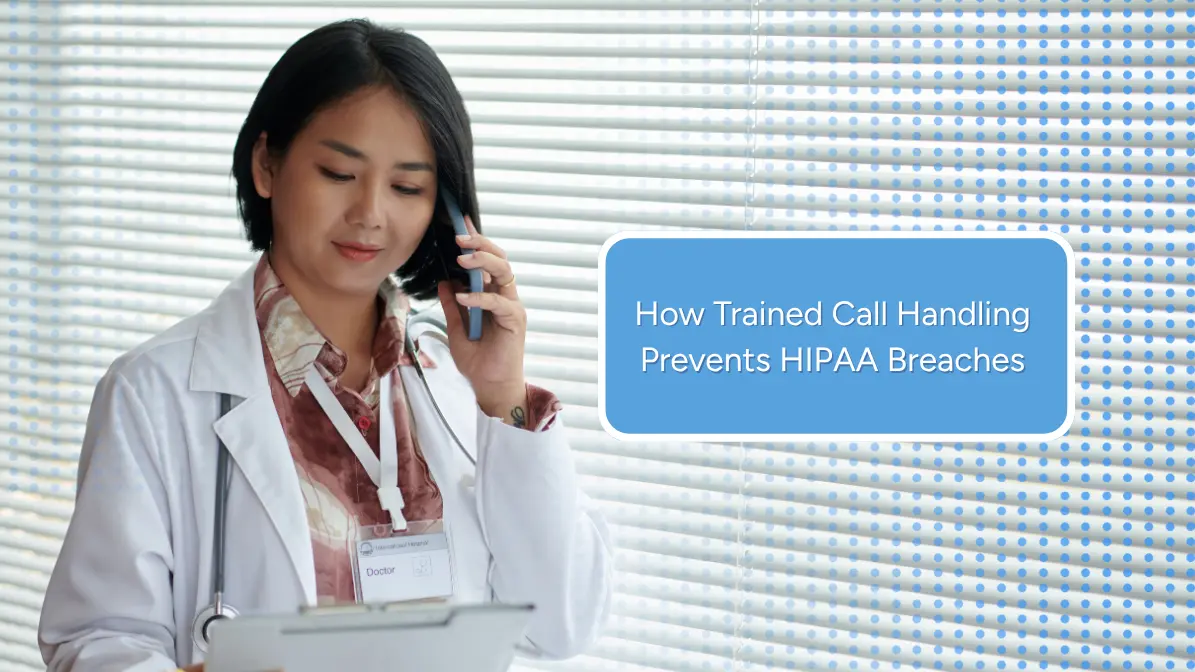

Every phone call to a healthcare provider carries risk. While digital systems like EHRs and secure portals receive most of the attention in compliance conversations, phone calls remain one of the most common points where patient privacy is compromised. A receptionist who reveals too much in a voicemail, a nurse who shares information with a relative without proper authorization, or an operator who texts appointment details from a personal phone can all trigger violations.
The problem is that many practices underestimate the regulatory weight of everyday communication. The Office for Civil Rights (OCR), which enforces HIPAA, treats these incidents with the same seriousness as lost laptops or hacked databases. Providers who want to protect their patients and themselves need to look closely at how calls are answered, routed, and documented. A trained medical answering service provides an additional safeguard that many clinics lack, reducing the chance of costly breaches and reinforcing patient trust.
The Basics of HIPAA in Call Handling
HIPAA’s Privacy Rule defines Protected Health Information (PHI) as any information that can identify a patient and relates to their health, treatment, or payment history. That includes names, phone numbers, appointment details, insurance status, and clinical updates. When this information is spoken over the phone, the same standards apply as if it were transmitted electronically or stored in a medical record.
This often surprises smaller practices, where calls are treated informally. For example, reading back lab results to a spouse without documented permission is a violation, even if the intent was to help the patient. Leaving a voicemail that mentions a diagnosis crosses the line, as does forwarding a message through unsecured text. Every one of these actions counts as handling PHI, and every one of them requires safeguards.
A trained answering service ensures that staff do not improvise or guess what can be said. Operators follow strict scripts, confirm caller authorization, and transmit messages securely. That structure dramatically reduces the gray areas where untrained staff often make mistakes.
HIPAA vs. State-Level Privacy Laws
HIPAA compliance is the baseline, but healthcare providers also need to consider the growing patchwork of state-level privacy laws. Regulations such as California’s Consumer Privacy Act (CCPA), New York’s SHIELD Act, and Texas’s HB 300 impose additional requirements that may apply even when federal rules are technically met.
For example, Texas law defines “covered entities” more broadly than HIPAA, pulling in a wider range of healthcare-adjacent businesses. California’s CCPA gives patients stronger rights to know how their data is shared, which could affect the way call information is documented and transmitted. In New York, the SHIELD Act requires “reasonable safeguards” not only for electronic records but also for the processes used to handle personal data, including call records.
The overlap of these laws means that compliance cannot stop at HIPAA checklists. Providers who rely on in-house staff without proper training may unknowingly create liability under state laws as well. A professional medical answering service that stays current on both federal and state requirements closes this gap, reducing exposure across multiple jurisdictions.
Common HIPAA Breach Scenarios in Phone Handling
While large data breaches make headlines, most compliance failures in healthcare happen through small, preventable mistakes during routine communication. Phone calls are especially prone to these errors because they rely on human judgment in real time.
One of the most common scenarios involves voicemail. A staff member leaves a message with too much detail, revealing test results or billing information that anyone with access to the phone can hear. Another frequent issue occurs when calls are routed incorrectly, exposing sensitive information to unauthorized staff. Even something as simple as confirming an appointment with the wrong relative can create a recordable violation.
Texting is another area of concern. Many offices allow staff to send messages about patients through personal devices without encryption. While convenient, this practice creates a direct line of risk that regulators can easily trace.
A medical answering service eliminates these weak points by following strict call scripts, confirming caller identities, and transmitting information only through secure, approved channels. By removing improvisation, the risk of an accidental breach drops significantly.
Fines and Reputational Risk
HIPAA violations carry steep financial penalties. Depending on severity and intent, the OCR can fine providers anywhere from $100 to $50,000 per violation, with annual maximums that reach into the millions. For smaller practices, even a single penalty can threaten long-term financial stability.
Yet the financial damage does not end with fines. Breaches also erode patient confidence. A study published by the Ponemon Institute found that more than 40 percent of patients said they would consider switching providers after their data was compromised. For healthcare organizations that rely on reputation and word-of-mouth referrals, this kind of trust erosion is often more damaging than the immediate penalty.
Negative press coverage, lower online ratings, and lost referrals all compound the impact of a single incident. Patients expect providers to protect their information with the same diligence that they deliver medical care. An answering service trained in HIPAA compliance helps reduce both financial and reputational risks by ensuring every call is handled according to regulation.
The Link Between HIPAA Compliance and Insurance Coverage
One of the lesser-known consequences of poor call handling is how it affects insurance. Many healthcare organizations rely on cyber liability or malpractice insurance to cushion the impact of a data breach. What providers may not realize is that these policies often include exclusions for incidents caused by negligence or non-compliance.
For example, if an employee knowingly uses a personal cell phone to send PHI without encryption, an insurer may argue that the breach was preventable and deny coverage. Similarly, if regulators determine that a practice failed to provide proper training, the financial burden may fall entirely on the provider.
This makes compliance not only a regulatory issue but also a financial one. A trained answering service reduces the likelihood of non-covered incidents by enforcing strict communication protocols. That safeguard not only protects patient information but also strengthens the provider’s position if an incident ever does occur. Insurance carriers are far more likely to provide coverage when an organization can demonstrate documented, consistent compliance efforts.
Shadow IT in Call Handling
Shadow IT refers to the use of unauthorized tools and processes outside of official systems. In healthcare, this often involves staff using personal smartphones, consumer messaging apps, or improvised call routing methods to manage patient information. These shortcuts are usually taken for convenience, but they introduce significant compliance risks.
A nurse who texts a lab result through an unsecured app is technically committing a HIPAA violation. A receptionist who forwards calls to their personal voicemail box may unintentionally store PHI on an unprotected system. While these actions may seem harmless in the moment, they create vulnerabilities that regulators take seriously.
The challenge is that many providers do not even know these practices are happening. Staff members under pressure to save time often create workarounds without considering the legal implications. A professional answering service eliminates the need for these shortcuts by providing compliant, reliable processes for call handling. By removing the temptation to cut corners, providers can ensure that every interaction stays within approved channels.
Patient Trust Beyond Compliance
While avoiding fines and regulatory issues is critical, the larger goal of compliance is to build and maintain trust. Patients share sensitive details with their providers, often at moments when they are vulnerable or anxious. How those details are handled during phone calls shapes their perception of the entire care experience.
When calls are managed by untrained staff, patients may sense hesitation or hear information mishandled. That undermines confidence, even if no formal violation occurs. On the other hand, consistent professionalism, secure message delivery, and careful attention to authorization reassure patients that their privacy matters.
Trust is not built through technology alone but through the daily interactions that patients experience. A medical answering service ensures that those interactions consistently reinforce reliability. Providers who invest in compliant call handling not only protect themselves legally but also create an environment where patients feel safe and respected. Over time, that confidence translates into stronger relationships, higher retention, and a reputation for quality care.
Securing Every Call, Protecting Every Patient
Every phone call represents a moment of truth for healthcare providers. Whether it is scheduling an appointment, delivering test results, or answering a billing question, the way information is communicated can either protect or expose the practice. HIPAA breaches through call handling are far more common than many organizations realize, and the consequences reach beyond fines to insurance gaps, operational disruption, and patient trust.
By partnering with a trained answering service, providers close one of the most overlooked gaps in compliance. Calls are handled consistently, securely, and in line with both federal and state privacy regulations. That investment does more than reduce risk. It reassures patients that their information is in safe hands, allowing providers to focus fully on delivering care.